
Adam Osterholzer: adam.osterholzer@colostate.edu, 970-222-9568
Dr. Punya Nachappa: Punya.Nachappa@colostate.edu, 785-383-4873
Visit our website at: https://www.csuwheatentomology.com/.
Request For Crop Rotation Field Sites: CWRF-funded research project
As part of our CWRF-funded research, we are studying the impacts of crop rotations on sawfly infestations, and we need more field sites! If you are interested in participating, please contact Adam about your rotation history and our team will come to sample your fields.
Wheat Stem Sawfly Updates
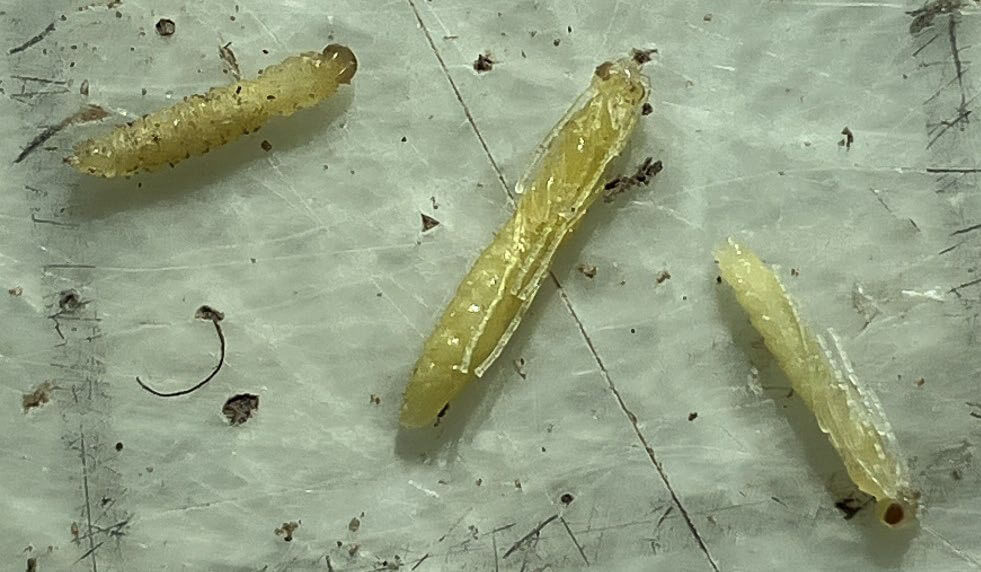
Our latest visit to the field sites at New Raymer and Orchard, CO took place on 4-25-24. No adults have been found at our 8 survey locations so far. In both New Raymer and Orchard, the sawflies are undergoing pupation (Figure 1). They are developing adult features, such as legs, eyes, etc. Given this, we expect the sawflies to begin their adult emergence soon (early to mid-May).
Cutworm Reports
We have received widespread reports of cutworm activity across the state. Sightings extend from NE Colorado all the way down south to Walsh. We are observing both the army cutworm (Euxoa auxiliaris) and the pale western cutworm (Agrotis orthogonia). Infestation pressure has been variable but appears to be generally more intense in the northern half of the state. Sally Jones-Diamond (CSU Crops Testing) reported fields meeting the treatment threshold in Logan, Phillips, and Adams counties.
Both species cause crop damage, with army cutworms feeding on above-ground foliage. Pale western
cutworms will feed on the plant crowns, completely severing stems. Scouting for both species can be
performed by sifting through soil and establishing a count of cutworms per row foot. Prior literature suggests a treatment threshold of 4-5 army cutworms per row foot, and 1-2 pale western cutworms per row foot. Insecticides are the primary means of control for both pests.
It’s important to note that severed stems observed at this time of year are due to cutworms, not
wheat stem sawflies. Sawfly lodging will not occur until the wheat matures closer to harvest.
More information on caterpillars in small grains can be found at:
https://extension.colostate.edu/topic-areas/insects/caterpillars-in-small-grains-5-577/.
Pyrethroid insecticides are effective against both army cutworm and pale western cutworm:
(https://wiki.bugwood.org/HPIPM:Small_Grains_Army_Cutworm). The EPA restored Chlorpyrifos use so it
is available as well- https://www.epa.gov/pesticide-worker-safety/epa-update-use-pesticide-chlorpyrifos-food
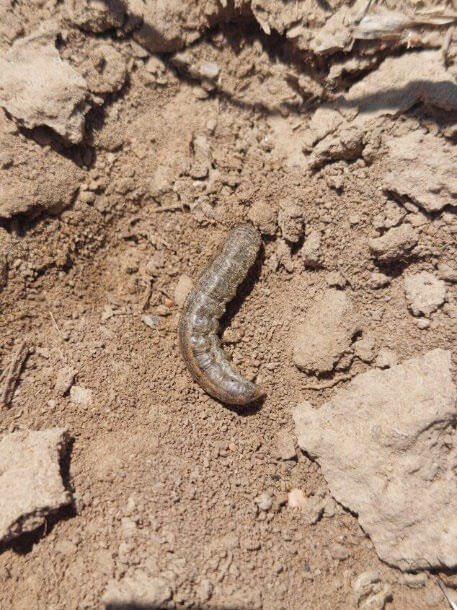
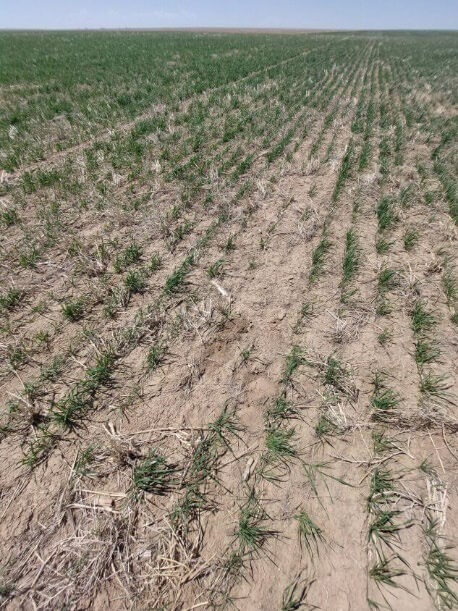
Figure 2 (right): Cutworm found residing within the soil substrate. Photos by Sally Jones-Diamond.
Brown Wheat Mite Reports
Ron Meyer (CSU Extension) and Sally Jones-Diamond have reported populations of brown wheat mites (Petrobia latens). Sightings occurred west of Burlington along the I-70 corridor. Further populations were discovered from Byers to Julesburg. Sally noticed a particularly bad field in Adams County. This pest thrives in dry conditions, and populations may increase in reduced instances of rainfall. We will continue to monitor this situation and report any developments.
For more information, visit: https://wiki.bugwood.org/HPIPM:Brown_Wheat_Mite_SG
Wheat Diseases
For wheat disease updates by Dr. Robyn Roberts, please see:
https://coloradowheat.org/category/news-events/wheat-pest-and-disease-update/
Acknowledgements
We would like to acknowledge the tireless work of CSU researchers and extension agents for reporting pest problems throughout the state. Special thanks to Madison Andersen, Tyler Benninghoven, Esten Mason, Kevin Larson, Brett Pettinger, Ron Meyer, Todd Ballard, Sally Jones-Diamond, Dennis Kaan, Kat Caswell, and Michaela Mattes.