
Adam Osterholzer: adam.osterholzer@colostate.edu, 970-222-9568
Dr. Punya Nachappa: Punya.Nachappa@colostate.edu, 785-383-4873
Visit our website at: https://www.csuwheatentomology.com/.
September 4, 2026
Statewide wheat stem sawfly (WSS) survey
A statewide survey has been conducted annually since 2013 to assess the spread and severity of Colorado wheat stem sawfly (WSS) infestation. The sites are selected based on wheat acreage per county, proximity to the previous year’s wheat stubble, and a minimum distance of 10 miles from other survey sites. 100 wheat tillers from each site are dissected to determine the presence of WSS larvae. From 2013 through 2025, survey data indicated a general increase in the proportion of medium and high infestation sites (Table 1).
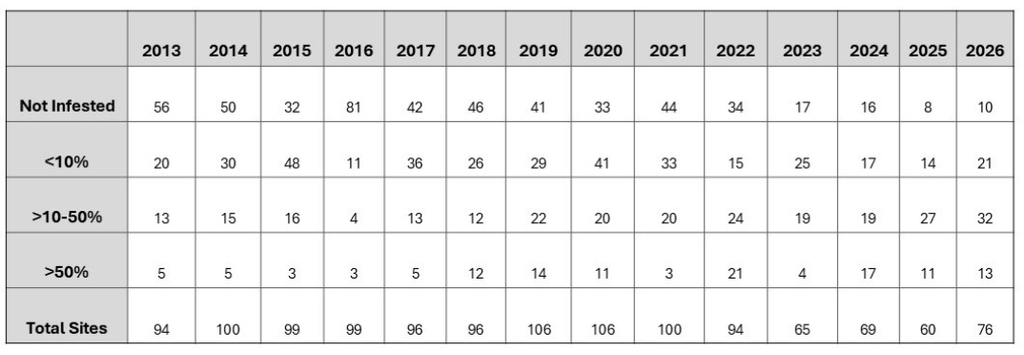
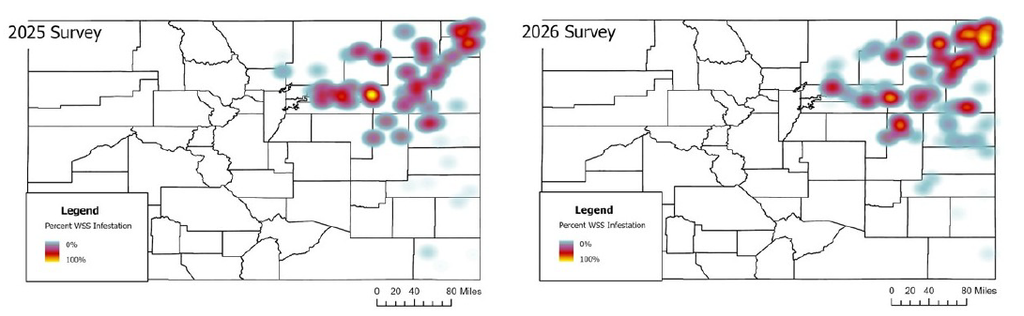
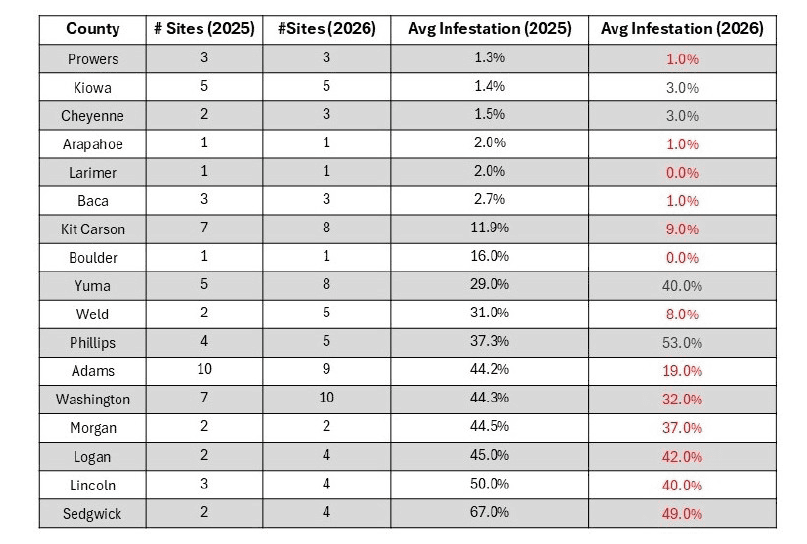
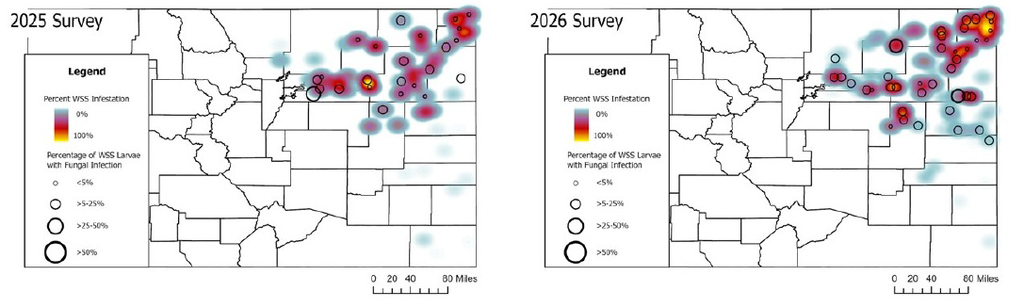
In 2026, however, populations decreased throughout much of the state (Figure 1). Extreme drought conditions, the continued use of semi-solid wheat varieties, and increasing populations of natural biocontrol agents (described below) are possible factors contributing to this reduction in WSS populations. Yuma and Phillips Counties were notable exceptions and had WSS population increase (Table 2). The average infestation rate for the entire state was 19.9%, which decreased from 25.4% in 2025.
Statewide Bracon parasitoid survey
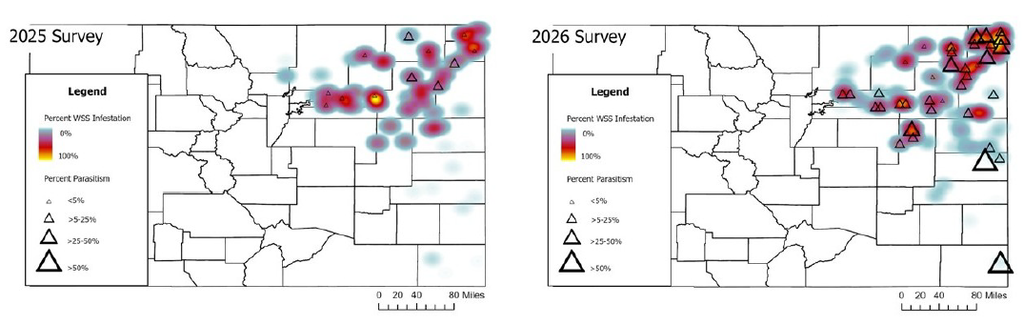
Bracon parasitoid wasps, which are important natural biocontrol agents of WSS, were detected at several locations for the first time in 2025 (Figure 2). The 2026 survey indicates that this emerging trend has continued, with parasitoid populations becoming increasingly widespread across the state (Figure 2). As part of our “Beneficial Bug Baler” project, parasitoid-infested bales from Nebraska were released at sites in Byers, New Raymer, and Orchard. However, we are also observing increases in parasitoid populations at non-release sites, suggesting that these natural enemies may be establishing beyond the areas where they were intentionally introduced. Although additional monitoring is needed, these trends are encouraging and suggest that integrated management strategies may be contributing to regional suppression of WSS populations.
State-wide entomopathogenic fungi survey
In addition to increasing parasitoid populations, we observed an increase in fungal-infected WSS larvae during our statewide surveys (Figure 3). The number of locations where entomopathogenic fungal infections were detected was significantly greater in 2026 than in 2025, suggesting that naturally occurring fungal pathogens may be contributing to increased WSS mortality.
Using DNA sequencing, we have identified six different fungal species associated with infected WSS larvae. Laboratory and greenhouse assays indicate that certain fungal strains can cause >50% mortality of WSS larvae. We are currently evaluating the efficacy of the three most promising strains against diapausing WSS larvae in wheat stubble this winter and will conduct additional field experiments in the spring. These studies will help determine whether these naturally occurring fungal pathogens have potential as biological control agents for WSS.
Acknowledgements
This research is supported by funds from the Colorado Wheat Administrative Committee. We would like to thank Ron Meyer, Kat Caswell, Sally Jones-Diamond, Jason Webb, and all others who help provide updates from across the state. Special thanks to our grower collaborators, including the Mertens, Wickstrom, and Linnebur families.
June 5, 2026
Wheat stem sawfly (WSS) updates
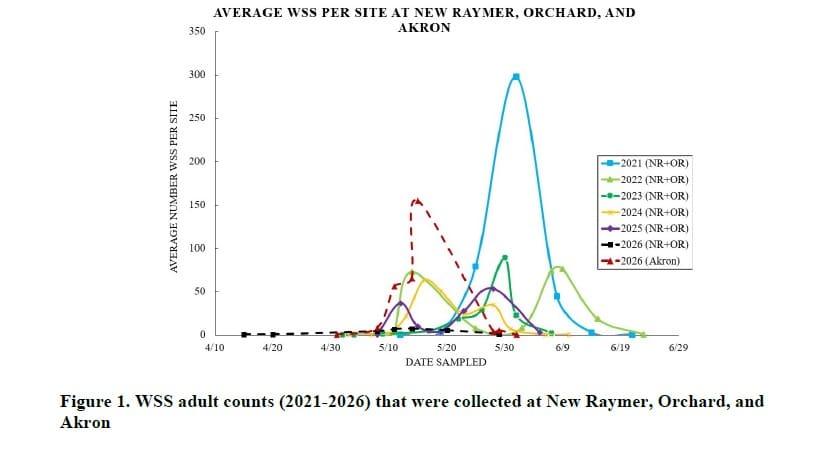
Wheat stem sawfly (WSS) adult emergence has concluded across our monitoring locations and, population levels varied considerably among sites. New Raymer recorded one of the lowest WSS populations we have observed on record (Figure 1), whereas Akron experienced a more typical flight pattern and population level. Differences in local weather conditions and the wheat cultivars grown at each location are likely contributing factors.
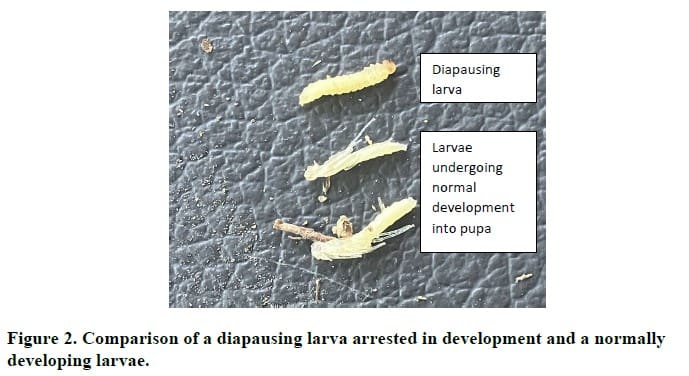
Another notable observation this year was the presence of larvae that stopped developing into pupae (Figure 2). Under unfavorable environmental conditions, insects undergo summer diapause (also called aestivation) to survive extreme heat, drought, or seasonal food shortages. It functions much like winter hibernation, slowing their metabolism so they can wait out harsh, dry conditions. The extent to which this occurred across the region remains unclear.
Given the variability in environmental conditions and WSS populations, there is still uncertainty regarding the overall impact of WSS infestations across Colorado this season. A clearer picture will emerge following completion of our statewide survey. Results will be made available via News | Colorado Wheat and https://www.csuwheatentomology.com/.
Aphid and mite outbreaks
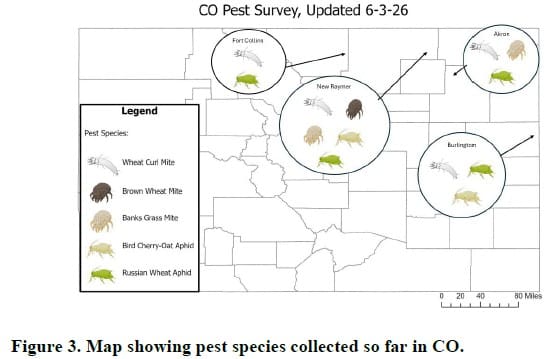
We are continuing weekly samplings at Akron, New Raymer, Burlington, and Fort Collins to track pest populations. Figure 3 summarizes our current survey results. The primary update is the continued spread of Russian wheat aphid (RWA) into the New Raymer region. In addition, we have received reports of RWA infestations from Byers and Last Chance. These reports suggest that RWA populations may be expanding across parts of eastern Colorado, highlighting the importance of continued scouting and monitoring throughout the growing season.
Wheat Diseases
For wheat disease updates by Dr. Robyn Roberts, please see: https://coloradowheat.org/category/news-events/wheat-pest-and-disease-update/
Acknowledgements
This research is supported by funds from the Colorado Wheat Administrative Committee. We would like to thank Ron Meyer, Kat Caswell, Sally Jones-Diamond, Jason Webb, and all others who help provide updates from across the state. Special thanks to our grower collaborators, including the Mertens, Wickstrom, and Linnebur families.
May 6, 2026
We’re excited to post our first summer newsletter for 2026! Our program will provide regular updates from the field and strive to keep growers informed about pest outbreaks. We welcome questions and will be discussing our findings in person at the CSU Crops Testing Field Days (June 10-12th and June 16th, see 2026 Wheat Field Days for more information). Previous newsletters are available here.
Wheat stem sawfly (WSS) updates
Fluctuating weather conditions have made it very challenging to predict the WSS flight. Our lab has a prediction model (available at OIPMC Degree-day calculator) that utilizes growing degree day accumulation to provide estimates for when the flight will occur. In extreme weather years such as 2026, field observations likely provide a more accurate representation of WSS activity than predictive models alone.
We observed a single adult in the field on April 15th at New Raymer. None have been spotted by our team since then. Pupal development has largely finished by this point and adults are likely to emerge by next week (May 11-15).
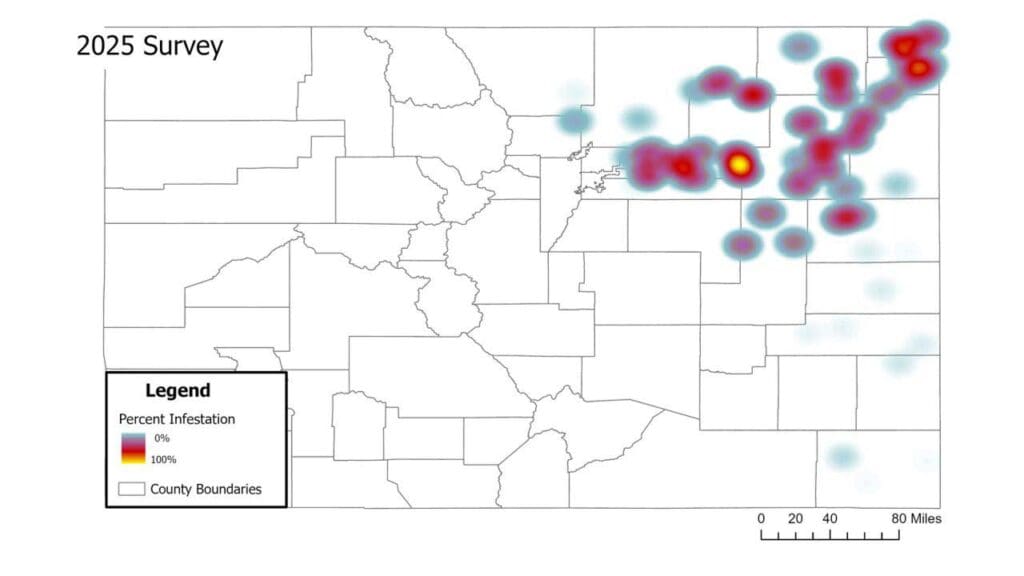
Regarding areas of concern for this year, growers near the I-70 corridor are advised to scout their field edges for WSS adults. Substantial populations have moved south of Burlington, and we expect infestation in this area to increase (Figure 1). Growers utilizing hollow stem varieties of wheat are particularly at risk.
Aphid and mite outbreaks
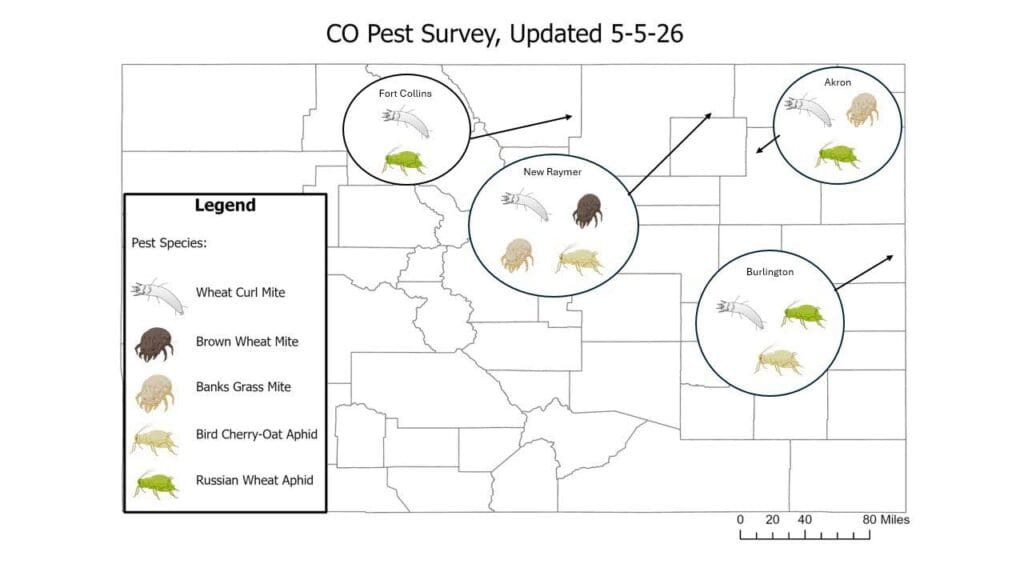
Aphids and mites thrive in drought conditions because hot, dry weather speeds up their life cycles. Growers have been reporting outbreaks of aphids and mites requiring making insecticidal applications. We’re conducting weekly samplings at Akron, New Raymer, Burlington, and Fort Collins to track pest populations. Figure 2 summarizes our survey results, showing increased diversity and abundance of aphids and mites across Colorado.
Scroll down to find the February newsletter that reported the first appearance of aphids and mites in Colorado in January!
Wheat Diseases
For wheat disease updates by Dr. Robyn Roberts, please see:
https://coloradowheat.org/category/news-events/wheat-pest-and-disease-update/
Acknowledgements
This research is supported by funds from the Colorado Wheat Administrative Committee. We would like to thank Ron Meyer, Kat Caswell, Sally Jones-Diamond, Jason Webb, and all others who help provide updates from across the state. Special thanks to our grower collaborators, including the Mertens, Wickstrom, and Linnebur families
February 17, 2026
State-Wide Aphid and Mite Survey
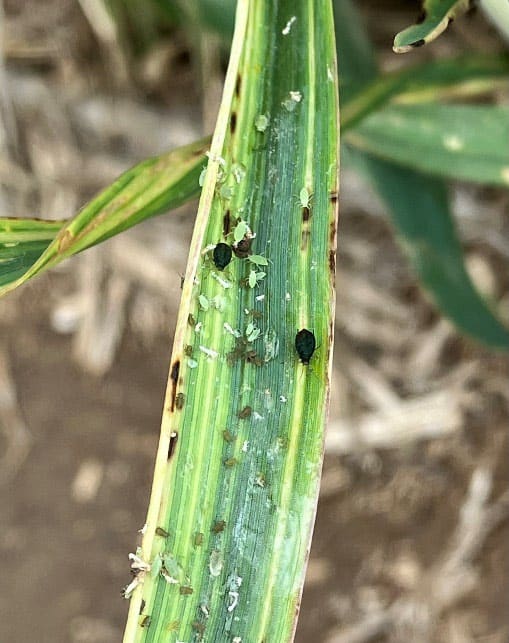
While our program primarily focuses on wheat stem sawfly research, we received numerous reports of mite and aphid outbreaks across Colorado in 2025. Aphid infestations were observed at several locations during the CSU Wheat Field Days (Figure 1). This trend has continued into 2026, with wheat curl mites recently reported in Otis, CO, by Sally Jones-Diamond (CSU Crops Testing).
To better understand these pest outbreaks, our team will initiate weekly statewide sampling beginning in April. Growers will be notified of outbreaks as quickly as possible, and pest populations will be monitored throughout the growing season.
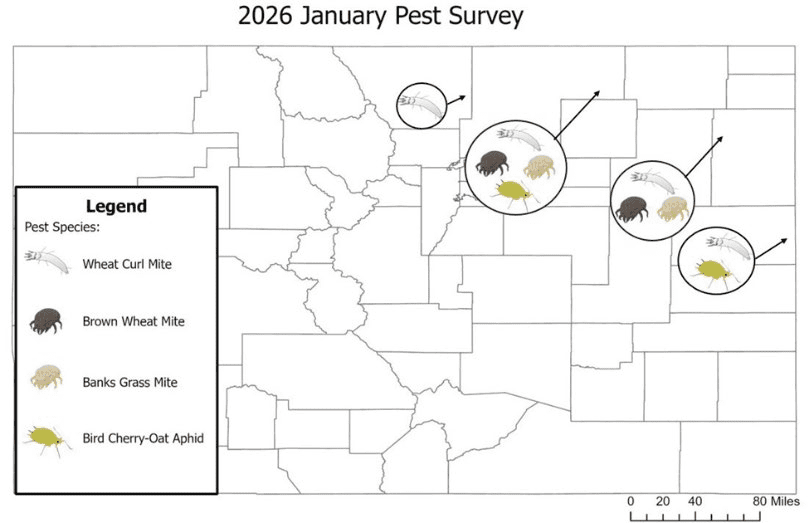
In response to unseasonably warm winter conditions, we also conducted a preliminary survey in January to assess pest presence on volunteer wheat and overwintering wheat. Surveys were conducted at four locations: Yuma, Burlington, New Raymer, and the ARDEC research station in Fort Collins. At each site, samples were collected from transects within CSU Crops Testing fields by harvesting whole plants for inspection. The results of this survey are summarized in Figure 2. Although current pest populations are low, these pests reproduce rapidly, and populations can increase quickly to outbreak levels.
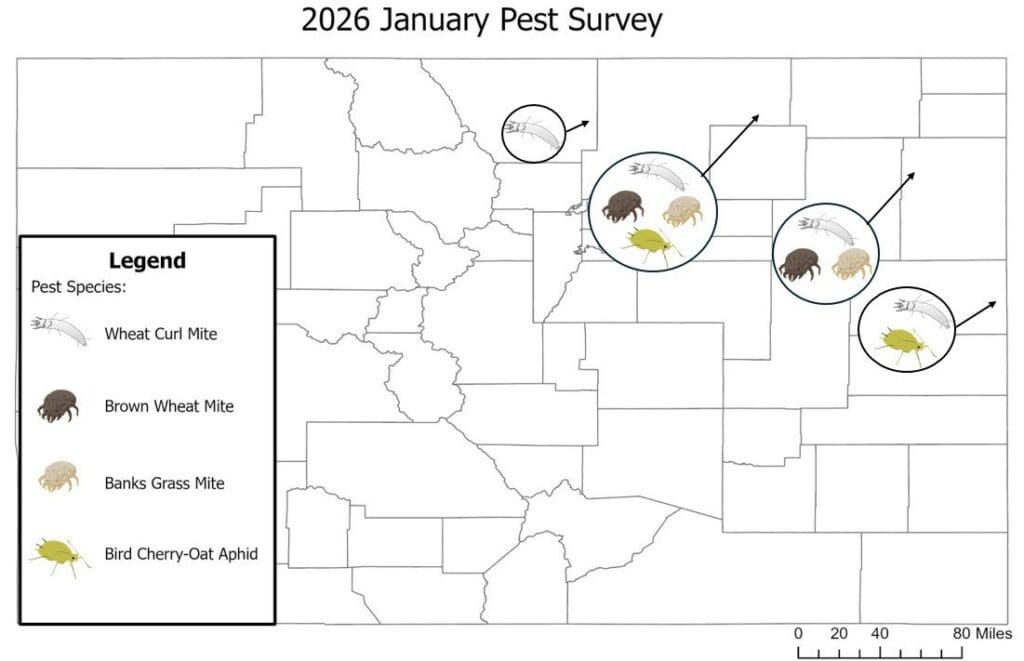
Figure 2: Map depicting pest species found on wheat during the Jan. 2026 survey.
We detected triticum mosaic virus (TriMV) in Yuma, Otis, Burlington, New Raymer, and Fort Collins while wheat streak mosaic virus (WSMV) was found in Otis, Burlington, and New Raymer.
Our findings in the spring will be posted bi-weekly by Colorado Wheat: News | Colorado Wheat. Past newsletters from our program are also archived on the CSU Wheat Entomology website: Extension. We have a full report on CO aphid species in our June 23, 2025 newsletter.
“Identify Cereal Pests” App Now Available for Colorado Growers!

Dr. Marek Boroweic, Director of the C. P. Gillette Museum, developed an app to identify cereal pests.
Identify Cereal Pests uses AI trained on real field images to help growers, crop advisers, and researchers quickly identify major cereal pests right from your phone or browser. Available free for Android, iPhone, and online, the app works in Colorado as well as the Inland Northwest. Every confirmed identification contributes anonymously to a research map, helping improve pest monitoring and integrated management across the region.
Join the growing user community today: download the app, try it in your fields, and help strengthen this resource for all wheat producers.


Acknowledgements: This research is supported by funds from Colorado Wheat Administrative Committee.